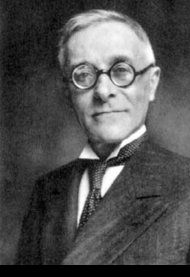
Levi Civita Tullio's European Curriculum by EuroCv
Europass
Curriculum Vitae
Tullio Levi Civita
http://tulliolevicivita.eurocv.eu
English
PERSONAL INFORMATION
First Name, Surname Tullio, Levi Civita Tullio, Levi Civita
Email demo3@eurocv.eu
       
       
Country Code IT
Place and date of birth Italy Padua 29-03-1873
Gender Male
WORK EXPERIENCE
Date (from - to) 12/1918 - 12/1938
Name and address of employer University of Rome
Type of business or sector Teaching
Occupation or position held Chair of Higher Analysis and Chair of Mechanics
Main activities and responsibilities I was always very international in my outlook and the ability of Rome to attract top quality students from abroad must have figured in my reasons to now want to make the move there. In 1918 I was appointed to the Chair of Higher Analysis at Rome, and two years later I was appointed to the Chair of Mechanics there.
Date (from - to) 01/1898 - 12/1918
Name and address of employer University of Padua
Type of business or sector Teaching
Occupation or position held Chair of Rational Mechanics
Main activities and responsibilities I was appointed to the Chair of Rational Mechanics at Padua in 1898, a post which I was to hold for 20 years. However several times during these twenty years attempts had been made to have me move to Rome. In particular in 1909 Castelnuovo tried hard to persuade me to move, but I was happy to remain in Padua. I was an outstanding mathematician with an impressive international reputation so it was natural for the University of Rome to try to attract me.
EDUCATION AND TRAINING
Date (from - to) 01/1894 - 12/1894
Name and type of organisation providing education or training Faculty of Science at Pavia.
Principal subjects/occupational skills covered I was awarded my teaching diploma in 1894 and in the following year I was appointed to the teacher's college which was attached to the Faculty of Science at Pavia.
Title of certification awarded Teaching diploma
Date (from - to) 01/1890 - 12/1892
Name and type of organisation providing education or training Faculty of Mathematics of the University of Padua
Principal subjects/occupational skills covered I graduated in 1892 and my dissertation was published in the following year after I had made some minor changes to it.
Title of certification awarded Doctor in Mathemathics
OTHER LANGUAGES
Native Language Italian
Self-assessment Understanding Speaking Writing
European level Listening Reading Spoken interaction Spoken production
English
C2
Proficient user
C2
Proficient user
C2
Proficient user
C2
Proficient user
C2
Proficient user
Common European Framework of Reference (CEF) level
SKILLS AND COMPETENCES
PERSONAL SKILLS AND COMPETENCES
Acquired in the course of life and career but not necessarily covered by formal certificates and diplomas.
I lectured in the United States in 1933 and in Moscow and Kiev in 1935. In 1936 I returned to the United States, lecturing at Harvard, Princeton and the Rice Institute. While in Houston I gave an interview which was seen as critical of Italy and the Italian consul asked for clarification. I was recalled to Italy but because of my leading international status the Italian government felt that it should not react too strongly. Later in 1936 the International Mathematical Congress was held in Oslo but I and all other Italian mathematicians, were forbidden to attend by our government. Despite this I was appointed as a member of the Commission for awarding Fields Medals.
SOCIAL SKILLS AND COMPETENCES
Living and working with other people, in multicultural environments, in positions where communication is important and situations where teamwork is essential (for example culture and sports), etc
Analytic dynamics was another topic that I studied and many of my papers examining special cases of the three-body problem. I began publishing papers on the subject in 1903, with another important paper appearing in 1906 which strengthened my earlier results. In 1920 I published a compendium on the three-body problem in Acta Mathematica. Then near the end of my career I became interested in the n-body problem.
He also wrote on the theory of systems of ordinary and partial differential equations. In [18] the authors argue that Levi-Civita was interested in the theory of stability and qualitative analysis of ordinary differential equations for three reasons: his interest in geometry and geometric models; his interest in classical mechanics and celestial mechanics, in particular, the three-body problem; and his interest in stability of movement in the domain of analytic mechanics. He added to the theory of Cauchy and Kovalevskaya and wrote up this work in an excellent book written in 1931.
My interest in hydrodynamics began early in my career with my paper Note on the resistance of fluids appearing in 1901.I worked later on waves in a canal and my proof of the existence of irrotational waves was a major contribution to a long standing open question.
In 1933 I contributed to Dirac's equations of quantum theory.
ORGANISATIONAL SKILLS AND COMPETENCES
Coordination and administration of people, projects and budgets; at work, in voluntary work (for example culture and sports), at home, etc
I had very great command of pure mathematics, with particularly strong geometric intuition which I applied to a variety of problems of applied mathematics. One of my papers in 1895 improved on Riemann's contour integral formula for the number of primes in a given interval. I am best known, however, for my work on the absolute differential calculus and with its applications to the theory of relativity. In 1886 I published a famous paper in which I developed the calculus of tensors, following on the work of Christoffel, including covariant differentiation. In 1900 I published, jointly with Ricci-Curbastro, the theory of tensors in Méthodes de calcul differential absolu et leures applications in a form which was used by Einstein 15 years later. The paper was requested by Klein when he met me in Padua in 1899 and, following Klein's wishes, it appeared in Mathematische Annalen.

Weyl was to take up my ideas and make them into a unified theory of gravitation and electromagnetism. My work was of extreme importance in the theory of relativity, and he produced a series of papers elegantly treating the problem of a static gravitational field. This topic was discussed in a correspondence between Einstein and me.
TECHNICAL SKILLS AND COMPETENCES
With computers, specific kinds of equipment, machinery, etc
Analytic dynamics was another topic that I studied and many of my papers examining special cases of the three-body problem. I began publishing papers on the subject in 1903, with another important paper appearing in 1906 which strengthened my earlier results. In 1920 I published a compendium on the three-body problem in Acta Mathematica. Then near the end of my career I became interested in the n-body problem.
He also wrote on the theory of systems of ordinary and partial differential equations. In [18] the authors argue that Levi-Civita was interested in the theory of stability and qualitative analysis of ordinary differential equations for three reasons: his interest in geometry and geometric models; his interest in classical mechanics and celestial mechanics, in particular, the three-body problem; and his interest in stability of movement in the domain of analytic mechanics. He added to the theory of Cauchy and Kovalevskaya and wrote up this work in an excellent book written in 1931.
My interest in hydrodynamics began early in my career with my paper Note on the resistance of fluids appearing in 1901.I worked later on waves in a canal and my proof of the existence of irrotational waves was a major contribution to a long standing open question.
In 1933 I contributed to Dirac's equations of quantum theory.
OTHER SKILLS AND COMPETENCES
Competences not mentioned above.
The Royal Society conferred the Sylvester medal on me in 1922, while in 1930 I was elected a foreign member. I was also an honorary member of the London Mathematical Society, the Royal Society of Edinburgh, and the Edinburgh Mathematical Society. I attended the 1930 Colloquium of the Edinburgh Mathematical Society in St Andrews.